
Blog / Insights
Bhutanese Diaspora Delegation Arrives in Nepal to Advance Humanitarian Access, Reconciliation
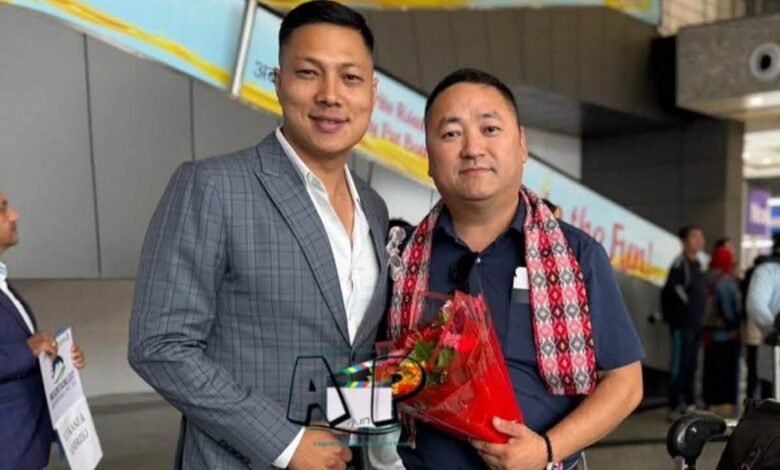
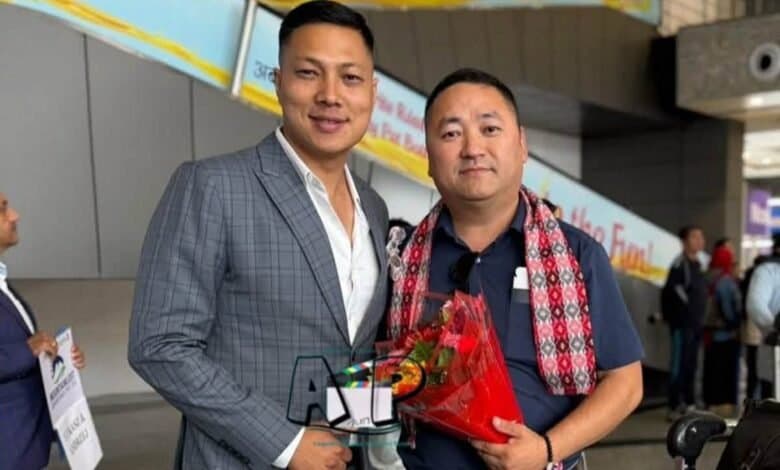
Kathmandu, Sept. 26: Dr. Kumar Gurung, a Bhutanese diaspora leader residing in Nebraska, United States, arrived in Kathmandu on Friday as part of an initiative aimed at promoting humanitarian access, family reunification and reconciliation for Bhutanese communities affected by displacement.
Gurung is among seven representatives of Peace Initiative Bhutan (PIB), a U.S.-based nonprofit organization dedicated to advancing peacebuilding, human rights, humanitarian collaboration and reconciliation for Bhutanese communities displaced in the early 1990s.
Originally from Bhutan, Gurung spent his formative years in Nepal before resettling in the United States. He holds a Ph.D. in Business Administration and serves as president of Triratna Foundation Inc. and the International Council of Gurung Buddhism. His professional and community engagement includes interfaith initiatives, humanitarian activities, cultural preservation, youth mentorship, scholarship programs and community development.
The remaining six members of the delegation are expected to arrive in Kathmandu on September 26. The group includes PIB co-founder Sudarshan Sharma, members Aarati Chapagai, Dipisha K.C. Khatri and Anisha Thapa, co-founder and board director Dr. Suraj Budathoki, and PIB member Kailash Mishra.
PIB stated that the delegation will conduct a series of consultations across Nepal between September 26 and October 8. The planned engagements will involve government representatives, diplomats, international organizations, civil-society institutions, academics, community leaders and Bhutanese refugee communities in Kathmandu, Jhapa and Morang.
The Nepal visit forms part of PIB’s broader efforts surrounding its proposed Bhutan National Reconciliation Accord 2026 and Durable Solutions and Reconciliation Framework. Through these initiatives, the organization aims to encourage dialogue, strengthen mutual trust, expand humanitarian cooperation and facilitate constructive engagement between Bhutan, Nepal and the Bhutanese diaspora.
According to Gurung, the initiative is intended to develop a peaceful and achievable humanitarian approach to addressing the challenges faced by families separated as a result of displacement.
He expressed hope for a future in which the governments of Bhutan and Nepal, alongside the Bhutanese diaspora, collaborate to promote reconciliation, humanitarian partnerships and lasting peace.
PIB’s proposed initiatives include facilitating family reunions, establishing humanitarian travel arrangements, restoring communication between relatives separated across borders and strengthening cooperation between relevant stakeholders.
The organization has also suggested involving neutral humanitarian agencies, subject to the consent of the concerned parties. Such organizations could help verify individual cases, locate separated family members, resolve documentation-related challenges and facilitate communication between relatives.
Highlighting the human impact of prolonged family separation, PIB co-founder Sudarshan Sharma emphasized that reconnecting families should remain at the heart of the initiative.
“This is first and foremost about families,” Sharma said. He pointed to the importance of enabling parents and children to reunite, allowing relatives to attend funerals and giving grandparents opportunities to meet their grandchildren. He added that urgent humanitarian concerns should not remain unresolved while broader political differences continue.
Similarly, Dr. Suraj Budathoki, co-founder and board director of PIB, said the delegation’s Nepal mission prioritizes addressing the humanitarian challenges experienced by Bhutanese families separated for more than three decades.
He explained that the organization is pursuing practical arrangements that would allow Bhutanese people to visit family members in Bhutan, particularly in situations involving family reunions, serious medical conditions, bereavement and the restoration of family contact.
The proposed reconciliation framework emphasizes nonviolence, mutual respect, inclusivity and humanitarian cooperation while recognizing the sovereignty and constitutional institutions of both Bhutan and Nepal.
PIB said its proposal is informed by internationally recognized principles relating to family rights and family unity, including provisions of the Universal Declaration of Human Rights and relevant guidance from the United Nations High Commissioner for Refugees (UNHCR) concerning families separated by displacement.
The organization is advocating for achievable initial steps that could provide assistance in urgent humanitarian situations while creating an environment of trust for future discussions and broader reconciliation efforts.
During their stay, the delegation is expected to participate in multiple meetings, consultations and dialogue programs in Kathmandu and eastern Nepal to engage with stakeholders and explore possible avenues for cooperation.
Peace Initiative Bhutan, established and led by members of the Bhutanese diaspora, works through advocacy, community engagement and peacebuilding initiatives. Its activities focus on promoting human rights, humanitarian cooperation and sustainable solutions for Bhutanese communities affected by forced displacement.